A wart does not need removal simply because it is present, but pain, repeated bleeding, spread, or failure of home treatment changes the decision. You will be able to judge when to seek an examination, what warning signs require caution, and how treatment options differ in discomfort, visits, healing, recurrence, and cost.
Key takeaways
- Discuss removal after months of persistence, recurrence, or failed salicylic acid treatment.
- Have changing, bleeding, painful, or uncertain growths examined before removal.
- Match treatment to the wart type, body site, pain level, and spread risk.
- Seek review when warts recur, multiply, or resist correctly performed treatment.
When does a wart become persistent or troublesome enough to discuss removal?
Discuss wart removal when the lesion has lasted for months or years, returned after treatment, or failed to improve after several weeks of correctly used over-the-counter salicylic acid. A persistent wart that spreads to nearby skin also meets practical wart removal criteria, even if it is not painful.
Treatment becomes more worth discussing when the wart causes a daily problem:
- Pain when walking, especially with a plantar wart pressed by body weight
- Tenderness, itching, cracking, or bleeding after minor contact
- Difficulty wearing shoes, working, playing sports, using your hands, or sleeping
- Repeated catching, rubbing, or other trauma
- Substantial cosmetic distress
Many common warts eventually disappear without treatment, but waiting becomes less attractive when the lesion is painful, repeatedly traumatized, spreading, or disrupting normal activities. A painful wart under the foot can alter how you walk, while a wart near a fingernail can interfere with hand use.
A bleeding wart featureelling? is not a diagnosis, and bleeding deserves attention if it happens repeatedly or without clear friction. Do not keep applying acid to a lesion that is rapidly changing, persistently bleeding, ulcerated, or not clearly a wart; arrange an examination first.
If you have diabetes, poor circulation, neuropathy, or reduced sensation, seek clinical advice before treating a foot wart yourself.
What warning signs mean the growth needs examination before removal?
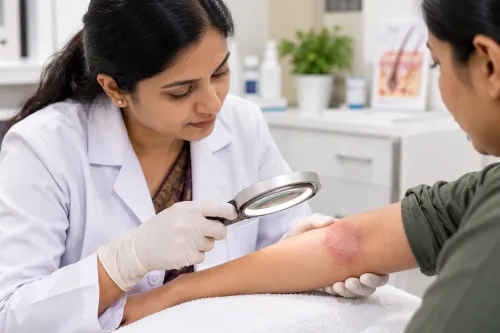
Rapid growth, uneven pigmentation, persistent bleeding, an open sore or ulcer, or marked inflammation means you should pause removal and arrange a skin examination. Do not keep applying wart treatments to a lesion that is rapidly changing, painful without pressure, crusted, or surrounded by increasing redness and swelling.
A clinician performs a wart diagnosis by comparing the growth with a corn, callus, molluscum, skin tag, mole, seborrhoeic keratosis, fungal lesion, or another skin condition. A “corn or wart” or “callus or wart comparison quiz?” may offer clues, but it cannot rule out an atypical lesion.
The assessment usually follows these steps:
1. The clinician asks how long the growth has been present, whether it is changing, and what you have already tried, including salicylic acid, freezing, cutting, or home remedies.
2. The clinician inspects the lesion’s surface, colour, borders, scaling, bleeding, and surrounding skin. Interrupted skin lines and tiny black dots after gentle paring can support a plantar-wart diagnosis, while they do not prove it.
3. The clinician examines the soles, nails, or genital area when the location makes that relevant. Warts around or beneath a nail need care because destructive treatment can damage the nail matrix.
4. If the wart differential diagnosis remains uncertain, or the lesion looks atypical, the clinician may recommend a biopsy before removal. Numerous, rapidly spreading, or unusually resistant growths also warrant assessment for an underlying immune problem.
Why does the wart type and location change the removal decision?
A common wart on a hand may be suitable for gradual salicylic-acid treatment, but location changes the risks, diagnosis, and acceptable cosmetic result. Use this checklist:
- A plantar wart on the sole hurts because walking presses it into the skin. Interrupted skin lines and small black dots after paring, usually thrombosed capillaries rather than dirt, support the diagnosis over a callus.
- A flat wart is smoother and often appears in groups, so shaving, scratching, or treating one lesion can spread it along nearby skin. Facial lesions need careful treatment to limit irritation and pigment change.
- A filiform wart around nose? Have it examined before removal because facial skin is highly visible and delicate; treatment must protect the nose, lips, eyelids, and nearby normal skin.
- A periungual wart beside or under a nail can distort nail growth. Destructive treatment near the nail matrix can cause lasting ridging or nail dystrophy, so examination should come first.
- Genital warts require clinical evaluation, not hand-and-foot salicylic-acid products, which can injure genital skin. Assessment also addresses sexually transmitted infections, partner considerations, and clinician-selected medicines or procedures.
- Location matters even more with diabetes, poor circulation, neuropathy, or reduced sensation. Do not self-treat a foot wart in these circumstances; arrange an examination.
Which wart treatments are worth comparing, and what are the trade-offs?
The best option depends on wart location, thickness, pain, previous treatment, skin tone, and your tolerance for repeated care. No method guarantees permanent clearance, because the wart can recur after visible tissue is destroyed.
| Option | Trade-off | Practical expectation |
|---|---|---|
| Salicylic acid wart treatment | Low cost, gradual, and home-based; avoid healthy skin | Apply daily for several weeks, soaking and gently filing softened dead skin |
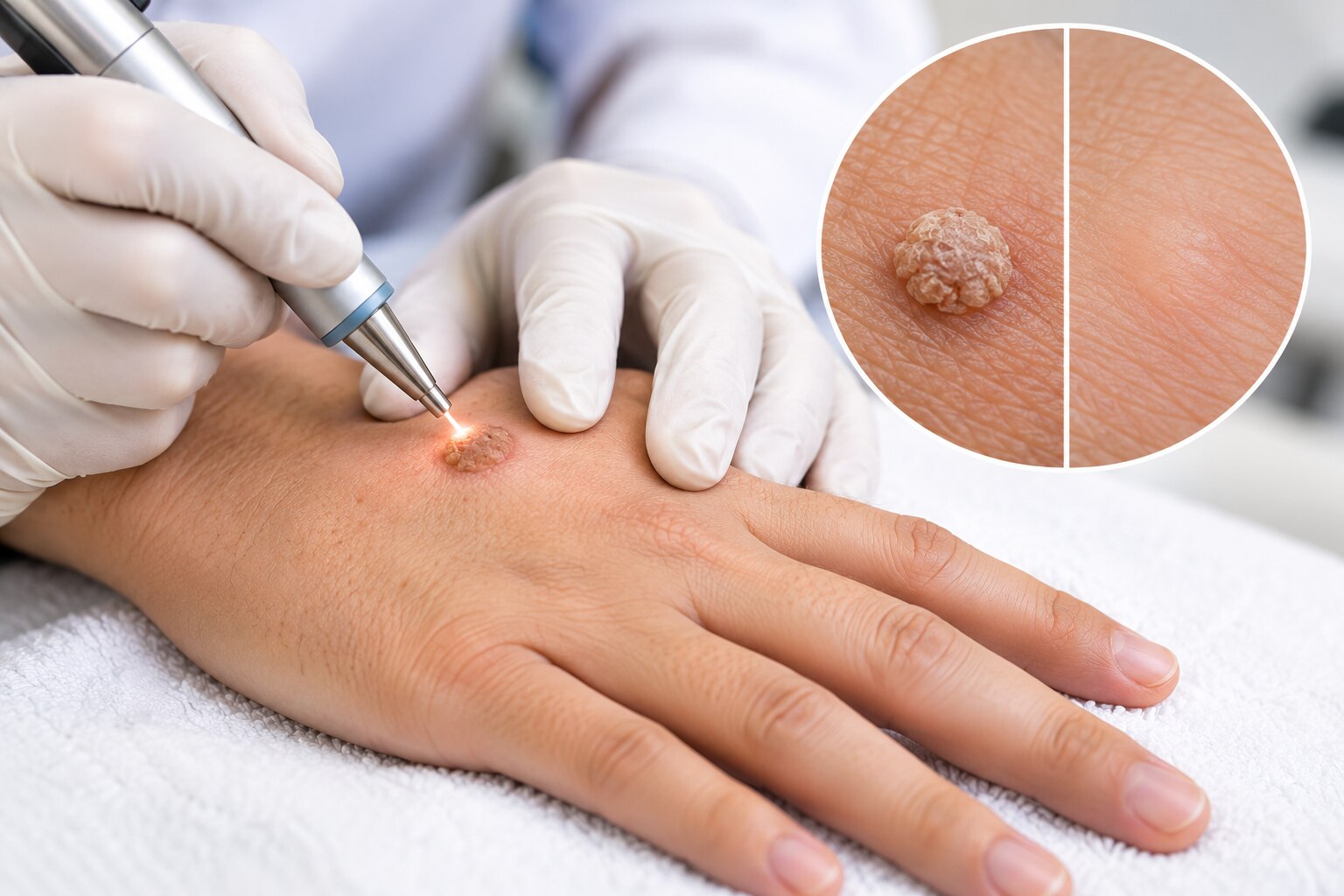
| Cryotherapy for warts | Pain, swelling, blistering, pigment change, and occasional scarring | Liquid nitrogen is commonly repeated every 2–3 weeks; plantar warts often need more sessions |
| Cantharidin | Blistering is intentional and requires wound care; availability varies | Useful for selected lesions, with a dressing and temporary discomfort |
| Curettage wart removal? | Immediate tissue removal but local anaesthetic, a wound, downtime, and scarring risk | Consider for a troublesome, well-defined wart after examination |
| Cautery or electrosurgery | Heat destroys tissue but can hurt and alter pigmentation or scar | Usually suited to selected lesions rather than routine self-treatment |
| Laser treatment | Destructive, costly, painful, and capable of scarring or pigment change | Usually reserved for treatment-resistant warts after simpler options fail |
| Combination treatment | More visits and aftercare, but may improve a stubborn response | Pairing methods can help plantar or recalcitrant warts |
A personalised assessment with Dr Megha Kadam-Best Skin Specialist 08048033401 in Pune can match the method to the site and budget without promising a fixed price or one-time result. Protect any blister or wound, follow dressing instructions, and expect downtime to vary by procedure.
What should you do about recurrence, spread, or unusually resistant warts?
Removal clears visible wart tissue but does not reliably eliminate human papillomavirus from nearby skin. Wart recurrence or new warts can follow apparently successful treatment, and no procedure guarantees that you can prevent wart spread.
- Do not cut, burn, shave, or pick the wart. These actions can injure skin and move the virus to nearby areas.
- Cover the wart with a clean dressing, especially during sports or activities involving close contact.
- Wash your hands after touching the wart or changing its dressing.
- Do not share files, pumice stones, towels, socks, shoes, or footwear used on affected skin.
- Return for planned follow-up, or sooner if the wart returns, new lesions appear, treatment causes a persistent wound, or symptoms worsen.
Numerous, rapidly spreading, unusually persistent, or treatment-resistant lesions need medical assessment. Recalcitrant warts can occur with immunosuppression, so the link between warts and weakened immunity deserves attention; a clinician may assess medications, medical conditions, and other causes rather than repeatedly destroying individual lesions.
Seek clinical advice before treating a foot wart if you have diabetes, poor circulation, neuropathy, or reduced sensation. Salicylic acid and destructive procedures can create burns or wounds that you may not feel or that heal poorly.
Have periungual lesions assessed before treatment too, because aggressive treatment around a nail can damage the nail matrix and cause lasting ridging.
Frequently asked questions
When does a wart become persistent or troublesome enough to discuss removal?
Discuss removal when the wart has lasted for months or years, returned after treatment, or failed to improve after several weeks of correctly used over-the-counter salicylic acid. A wart that spreads to nearby skin also warrants discussion, even without pain.
What warning signs mean the growth needs examination before removal?
Arrange an examination before treating a growth that bleeds without clear injury, changes in shape or colour, grows quickly, becomes unusually painful, develops an irregular surface, or might not be a wart. Do not self-treat a growth when its diagnosis is uncertain.
Why does the wart type and location change the removal decision?
Common warts, plantar warts, flat warts, and periungual warts respond differently. Treatment also depends on whether the lesion is on the face, near a nail, on weight-bearing skin, or close to sensitive tissue, because scarring, pain, and nail damage carry different consequences.
Which wart treatments are worth comparing, and what are the trade-offs?
Options include salicylic acid, cryotherapy, curettage, cautery, laser treatment, and other clinician-selected therapies. Compare expected treatment time, pain, blistering, pigment changes, scarring, healing needs, number of sessions, and recurrence risk rather than choosing by speed alone.
What should you do about recurrence, spread, or unusually resistant warts?
Return for reassessment when a wart comes back, multiplies, or fails to respond to correctly performed treatment. Confirm the diagnosis, review treatment technique and immune or medical factors, and avoid picking or sharing towels, nail tools, footwear, or personal grooming items.