Repeated frowning, squinting, forehead movement and smiling fold the same areas of skin until lines become easier to see. Understanding the muscle action behind those lines will help you judge whether Botox fits your concern, compare it with other treatments and prepare for a safe consultation.
Key takeaways
- Repeated muscle contractions turn temporary creases into persistent facial lines.
- Botox temporarily reduces nerve signals that trigger targeted muscle contractions.
- Forehead lines, frown lines and crow’s feet require different injection plans.
- Botox is not the right tool for every wrinkle or skin texture concern.
How Repeated Muscle Movement Creates Dynamic Lines
A frown repeated thousands of times does more than briefly crease the skin. Each repeated muscle contraction pulls the same area into a fold; over time, the skin’s collagen and elastic support become less able to spring back, so the crease starts to remain visible after the expression ends.
These are dynamic facial lines because movement creates them first.
Common examples include:
- Frown lines between the eyebrows, formed when the glabellar muscles draw the brows inward and downward
- Horizontal forehead lines, formed when the frontalis muscle lifts the brows
- Squinting lines beside the eyes, formed when the muscles around the eyes tighten during smiling or squinting
Botox temporarily reduces the strength of the targeted muscle’s signal, so that muscle does not contract as forcefully. It does not fill the crease, add skin volume, remove pigment, or resurface sun-damaged skin. The reduced movement gives the overlying skin fewer opportunities to fold and can soften lines that appear during expression.
The effect depends on muscle strength, facial symmetry, brow position and the balance between nearby muscles. A line that remains deeply etched while your face is relaxed may improve without disappearing, because fixed folding, collagen loss and sun damage also contribute.
Excessive weakening or poorly chosen placement can cause brow heaviness, asymmetry or a frozen expression until muscle activity returns.
What Botox Changes at the Nerve–Muscle Junction
At the neuromuscular junction, a nerve normally releases acetylcholine, the chemical signal that tells a muscle to contract. Botulinum toxin interrupts acetylcholine release at selected nerve endings, so the targeted muscle receives fewer contraction signals.
This produces temporary muscle weakening rather than added volume. With less forceful movement, the overlying skin folds less during frowning, squinting, forehead movement or smiling, which reduces the appearance of lines created by those actions.
The most predictable movement-related targets include:
- Glabellar lines between the eyebrows
- Horizontal forehead lines
- Lateral canthal lines, or crow’s feet, beside the eyes
The toxin does not fill a crease, resurface the skin or replace lost fat, collagen or elasticity. A line that remains deeply visible while your face is relaxed can soften, but skin folding, sun damage and collagen loss may keep it noticeable.
Cosmetic effects usually begin within 1–2 days, develop during the first week or two and last about 3–4 months. Duration depends on the treated area, dose, muscle strength and individual response.
The goal is reduced contraction, not complete immobility. Excessive weakening or misplaced toxin can cause a frozen appearance, brow heaviness, asymmetry or temporary eyelid or brow drooping. Conservative dosing preserves useful expression while limiting these problems.
Which Areas Respond Best and How Clinicians Plan Injection Points
Glabellar lines between the eyebrows, horizontal forehead lines, and lateral canthal lines beside the eyes are the most predictable cosmetic treatment areas. Lateral canthal lines are commonly called crow’s feet. Lines that remain deeply etched while your face is relaxed may soften, but skin folding, collagen loss, and sun damage can keep them visible.
| Area | What the clinician assesses | How it guides injection points |
|---|---|---|
| Glabellar lines | Frowning strength, resting asymmetry, eyelid anatomy, and brow position | Targets the muscles drawing the brows inward without over-weakening nearby support |
| Horizontal forehead lines | Forehead muscle strength, brow height, and existing brow or eyelid heaviness | Uses a conservative pattern because excessive weakening can lower the brows |
| Lateral canthal lines or crow’s feet | Smile intensity, eye shape, lower-eyelid support, and side-to-side differences | Limits treatment to the outer eye muscle while protecting natural smiling movement |
The assessment happens with your face relaxed and while you frown, raise your brows, squint, and smile. The clinician compares muscle strength and movement on both sides, then maps points according to anatomy rather than using a fixed number.
Forehead and frown muscles counterbalance each other. Weakening one group can change the apparent brow position or expose asymmetry that was already present. A conservative plan preserves expression and reduces the risk of brow heaviness, eyebrow asymmetry, or eyelid or brow ptosis. The aim is controlled movement, not a frozen face.
When Botox Is the Wrong Tool for a Facial Line
A line that appears during frowning, squinting, raising your eyebrows or smiling, then softens when your face rests, is movement-related and may respond to Botox. A crease that remains clearly visible at rest has a static component; weakening the muscle may soften it but will not rebuild damaged collagen or erase the fold.
| Feature | What it suggests | Approach that may fit |
|---|---|---|
| Movement-related line | Appears or deepens with expression and eases at rest | Botox may reduce the muscle contraction causing it |
| Static wrinkles | Remain etched into relaxed skin, often with sun-related texture or collagen loss | Skin care, laser resurfacing or other resurfacing treatment |
| Pigment change | Brown, grey or uneven colour without a matching muscle pattern | Sunscreen, pigment treatment or selected chemical peels |
| Laxity | Loose or crepey skin that does not tighten when you stop moving | Skin-tightening or surgical assessment rather than Botox alone |
| Volume loss | A hollow, shadow or groove caused by reduced fullness | Dermal fillers or another volume-restoring option |
Check the line in a relaxed face and during the expression that creates it. Botox does not replace sunscreen, fill a hollow or correct pigment; it only temporarily reduces selected muscle activity.
A deeply etched line can need combined treatment, but adding toxin to a static fold will not solve its main cause. Ask for an assessment of skin quality, facial volume, laxity and muscle movement before choosing injections.
What the Appointment, Aftercare and Ongoing Plan Involve
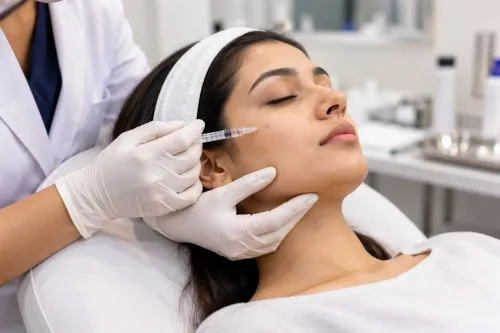
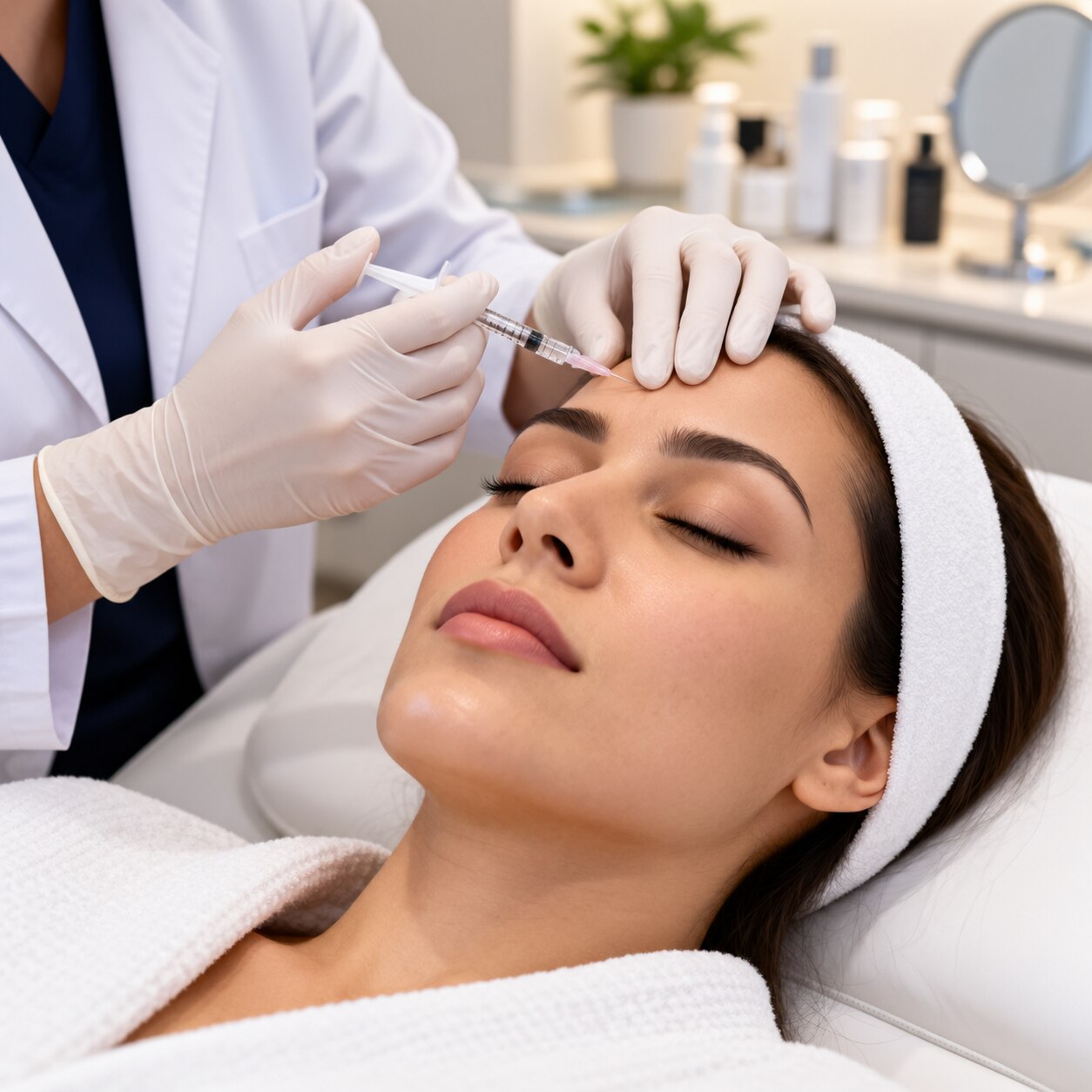
The consultation should include a facial assessment at rest and during frowning, raising the eyebrows and squinting. The clinician should discuss goals, brow position, asymmetry, muscle strength and resting lines before facial marking and multiple small injections. Ask which areas are being treated, why each dose is chosen, and when results will be reviewed.
Disclose previous botulinum toxin treatments, allergies, pregnancy or breastfeeding, neuromuscular disorders, swallowing or breathing problems, facial infection, and medicines that increase bruising risk, including anticoagulants. Do not allow injections into infected skin.
Aftercare instructions should cover avoiding pressure or rubbing at injection sites and what to do about bruising, headache, eyebrow heaviness or eyelid ptosis. Contact the clinic for unexpected weakness. Seek urgent medical assessment for generalized weakness, double vision, difficulty swallowing or breathing; do not wait for a routine review.
Use this comparison when assessing a clinician:
| Criterion | Reassuring sign | Warning sign |
|---|---|---|
| Training and setting | Licensed medical practitioner, appropriate clinical facility | Home visit or unclear credentials |
| Planning | Explains anatomy, dose, risks and alternatives | Promises a fixed dose or guaranteed result |
| Product and records | Shows sealed product, batch details and documents consent | Cannot identify the product or keeps no treatment record |
| Follow-up | Provides a review plan and urgent contact route | No aftercare or emergency instructions |
Whether you consult Dr Megha Kadam-Best Skin Specialist 08048033401 or another clinician, choose someone who treats conservatively. The effect fades, so repeat sessions should follow your anatomy and response, not an automatic schedule.
Frequently asked questions
How do repeated muscle movements create dynamic facial lines?
Repeated contractions fold the same skin area until collagen and elastic support become less able to restore its original surface. The crease then remains visible after the expression ends.
What does Botox change at the nerve–muscle junction?
Botox temporarily reduces the nerve signal that tells a targeted muscle to contract, limiting the movement that creates a dynamic line.
Which facial areas respond best to Botox?
Forehead lines, frown lines between the eyebrows and crow’s feet commonly respond because muscle movement contributes strongly to these lines. Clinicians choose injection points according to muscle anatomy and the person’s movement pattern.
When is Botox the wrong tool for a facial line?
Botox is not the best choice when a line is caused mainly by lost volume, loose skin, sun damage or surface texture rather than muscle movement.
What do Botox appointments and aftercare involve?
A clinician assesses facial movement, selects injection points and administers small injections. Aftercare and the ongoing plan include following the clinician’s instructions, reviewing the result and scheduling further treatment when appropriate.