Fine lines, pigmentation, laxity, enlarged pores and volume loss do not respond to the same treatment. By separating the visible change from its cause, you can compare topical care, devices, injectables and surgery against realistic benefits, risks, recovery and maintenance needs.
Key takeaways
- Name your main concern before choosing an anti-aging procedure.
- Match fine lines, pigmentation, texture and laxity to different treatment categories.
- Tell your dermatologist about medications, skin conditions and recent procedures.
- Compare downtime, number of sessions and result timing before committing.
Which skin change is actually bothering you most?
Name the change that bothers you most before choosing a procedure. “Anti-aging” can mean fine lines, pigmentation irregularity, uneven texture, laxity, dryness, dullness, enlarged pores or volume loss; these problems do not share one solution.
Check your face in four ways:
- Relax your forehead, eyes and mouth, then smile, frown and raise your eyebrows.
- Look straight on and from both sides in natural light.
- Examine your face at rest for lines that remain visible.
- Compare dated photographs taken in the same lighting and expression.
| Concern | What you may notice | Treatment direction |
|---|---|---|
| Fine lines | Creases with or without expression | Skin-quality care or resurfacing |
| Dynamic wrinkles | Lines appear or deepen during movement | Botulinum toxin can reduce repeated muscle contraction |
| Static lines | Etched lines remain when your face is relaxed | Retinoids, resurfacing or other collagen-focused treatment |
| Pigmentation or dullness | Brown patches, uneven tone or lack of brightness | Diagnose the pigment problem before peels or lasers |
| Uneven texture or enlarged pores | Roughness, shallow scars or visible openings | Microneedling or resurfacing may help |
| Laxity | Skin and facial tissues descend or look loose | Tightening treatment or surgical lifting, depending on severity |
| Volume loss | Hollow temples, cheeks or under-eyes | Carefully selected volume restoration |
| Dryness | Tightness, flaking or fine surface creasing | Barrier repair and moisturising care |
Loose skin is not the same as hollowing: laxity involves tissue descent, while volume loss reflects reduced fat or soft-tissue support. A resurfacing treatment cannot replace cheek volume, and filler cannot correct diffuse sun damage.
Which treatment category matches each concern?
Match the treatment to the structure causing the change: surface damage needs skin care or resurfacing, movement needs muscle relaxation, volume loss needs restoration, and substantial sagging needs lifting.
| Option | Best target | What it cannot correct |
|---|---|---|
| Broad-spectrum sunscreen SPF 30 and topical retinoids | Photodamage, fine wrinkles, dullness and uneven texture | Cannot restore lost volume or remove substantial loose skin |
| Chemical peels | Selected surface pigmentation and texture problems | Cannot correct cheek hollowing or advanced laxity |
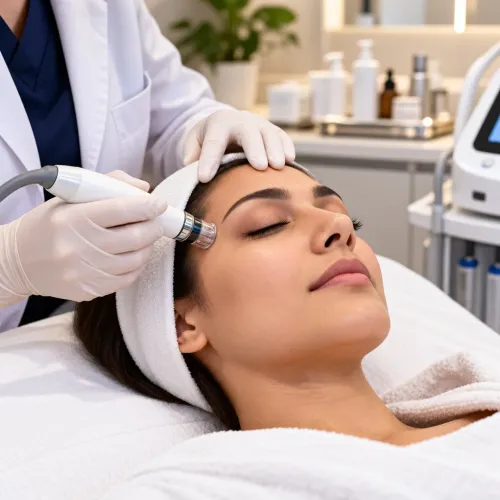
| Microneedling | Collagen remodeling for fine lines, acne scars and enlarged pores | Cannot replace facial volume or reproduce a facelift |
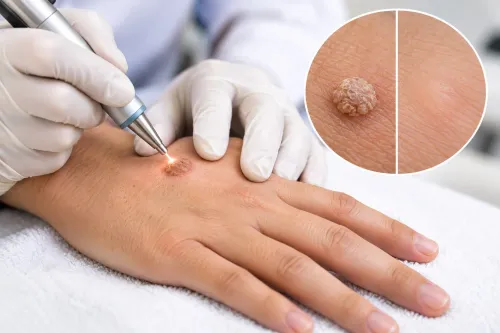
| Nonablative lasers | Gradual improvement in pigment and texture with less downtime | Cannot provide major resurfacing or restore volume |
| Ablative lasers | Deeper resurfacing for pronounced texture and etched lines | Cannot replace cheek volume; requires more healing and wound care |
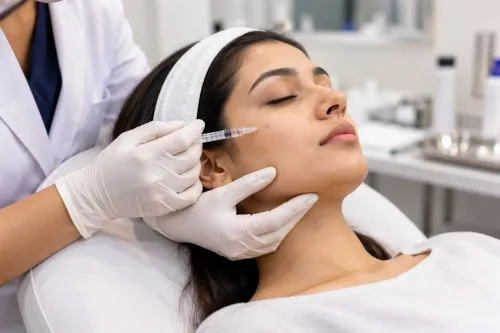
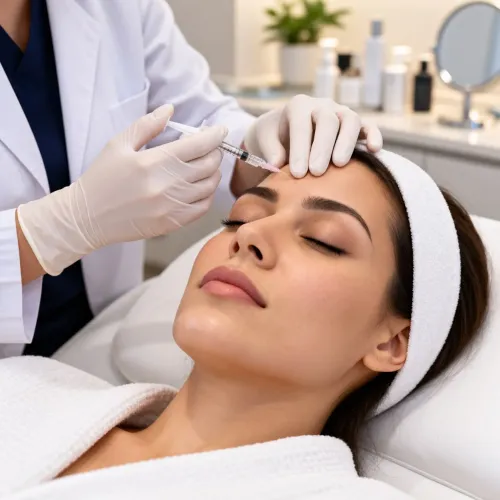
| Botulinum toxin | Dynamic wrinkles caused by repeated muscle contraction | Cannot treat static lines, sun damage or volume loss |
| Fillers | Selected hollows and volume loss | Cannot correct diffuse sun damage or loose excess skin |
| Biostimulators | Gradual collagen change and selected volume support | Cannot deliver immediate lifting or surface resurfacing |
| Radiofrequency or ultrasound | Modest, gradual tightening | Cannot remove substantial redundant skin |
| Surgical lifting | Major tissue descent and redundant skin | Does not replace treatment for pigment or fine surface texture |
Use topical retinoids gradually: dryness, peeling and irritation are common when you start too often or too strongly. A resurfacing laser cannot replace lost cheek volume, while filler cannot correct diffuse sun damage. Surgical lifting becomes the more predictable choice when laxity is substantial.
What personal factors change the safest treatment choice?
Skin sensitivity, skin tone and recent tanning can change the safest device, peel strength and recovery plan. Darker skin and recently tanned skin have higher risks of post-inflammatory hyperpigmentation or hypopigmentation after some lasers and intense pulsed light treatments, so ask about conservative settings, a test spot and strict protection from ultraviolet and visible light.
1. Tell the clinician about acne, rosacea, active infection, open sores, poor wound healing or a history of keloids. Treating inflamed or infected skin first can prevent worsening, while microneedling or resurfacing may be unsuitable when healing is impaired or raised scars develop easily.
2. Report melasma or previous darkening after irritation. Heat, aggressive peels and poorly selected lasers can make melasma darker, so pigment control and photoprotection may need to come before resurfacing.
3. List autoimmune disease, blood thinners, isotretinoin or other medicines, previous fillers, threads, peels, lasers and surgery. These details affect eligibility, timing, wound healing and infection risk.
4. Discuss pregnancy and breastfeeding before any treatment. Ask specifically about topical retinoids if you are pregnant or trying to conceive; the American Academy of Dermatology advises avoiding retinoids during pregnancy.
A cold-sore history matters before resurfacing or injectables because treatment around the mouth can reactivate the virus; ask whether preventive antiviral medicine is needed. Filler requires extra screening and a trained injector: accidental vascular injection can cause tissue injury, stroke or blindness.
Severe pain, blanching, mottled skin or visual symptoms after filler require immediate medical assessment.
What should happen during a treatment consultation?
A useful consultation starts with a skin examination at rest and during facial movement, not with a treatment package. The clinician should review your medical history and medication review, then ask about pregnancy or breastfeeding, cold sores, keloids or poor scarring, recent tanning, autoimmune disease and prior cosmetic procedures.
They should also check for active acne, infection, melasma or another pigment disorder.
Photographs from consistent angles help document baseline changes. The clinician should explain a working diagnosis, treatment goals, contraindications, alternatives, expected recovery and uncertain outcomes before seeking photographs and consent. Ask what the proposed treatment actually targets:
- Skin quality: texture, pigment, fine lines or photodamage
- Muscle activity: expression lines that deepen with movement
- Volume: hollowing or selected soft-tissue loss
- Physical lifting: descended or redundant skin
| Option | Addresses | Does not replace |
|---|---|---|
| Resurfacing laser or peel | Surface texture and selected pigment | Lost cheek volume or major lifting |
| Botulinum toxin | Repeated muscle contraction | Static etched lines or lax skin |
| Filler or biostimulator | Selected volume loss or gradual collagen change | Diffuse sun damage |
| Radiofrequency or ultrasound | Modest tightening | Surgical correction of substantial excess skin |
Before booking, ask which diagnosis supports the recommendation, what happens if pigmentation worsens, and which alternatives were rejected. A specialist assessment in Pune, such as with Dr Megha Kadam-Best Skin Specialist 08048033401, can help match the diagnosis to medical, laser, hair or cosmetic dermatology care rather than treating every concern as a sales opportunity.
How should you compare downtime, sessions and result timing?
Compare the downtime, number of sessions, treatment intervals and result timing before you book. A treatment with little recovery can still require several visits, while a single intensive procedure can interrupt work and social plans for weeks.
| Option | Downtime and sessions | Result timing and limits |
|---|---|---|
| Retinoids and sunscreen | Continuous use; irritation can require gradual retinoid introduction | Retinoid improvement takes weeks to months; sunscreen prevents further photodamage |
| Superficial peels, microneedling and nonablative lasers | Planned sessions separated by recovery intervals; microneedling causes short-term redness, swelling or pinpoint bleeding | Texture and pigment improve progressively, not instantly |
| Biostimulators, radiofrequency and ultrasound | Multiple or staged sessions are common | Collagen change and tightening develop gradually; radiofrequency and ultrasound offer modest tightening and do not remove excess skin |
| Botulinum toxin and fillers | Usually brief recovery; toxin requires repeat treatment | Botulinum toxin is temporary, often lasting about three to four months. Fillers change volume quickly but require urgent assessment for severe pain, blanching, mottled skin or visual symptoms |
| Ablative lasers, deeper peels and surgical lifting | Longer wound care or surgical recovery | They can produce larger or more predictable changes, but carry greater pigment, infection and scarring risks; lifting is more predictable for major laxity |
Aftercare includes sun protection, prescribed cleansing or medication, avoiding picking and attending review appointments. Ask who will manage complications and what recovery signs require contact. A filler emergency is not a routine follow-up issue.
Frequently asked questions
How do you choose an anti-aging treatment for your skin?
Start with the change that bothers you most, such as fine lines, pigmentation, uneven texture, laxity, dryness, dullness, enlarged pores or volume loss. Match that concern to a treatment category rather than choosing a procedure by its anti-aging label.
What personal factors affect the safest anti-aging treatment choice?
Your dermatologist should consider your skin type, medical history, medications, active skin conditions, tendency to form scars or pigmentation, recent procedures and expectations before recommending treatment.
What should happen during an anti-aging treatment consultation?
The consultation should identify your main concern, examine your skin, review relevant health and treatment history, explain suitable options and discuss risks, preparation, aftercare, downtime, session requirements and expected timing.
How should you compare anti-aging treatments?
Compare the treatment target, downtime, number of sessions, discomfort, recovery requirements, risks and how quickly results appear. A longer-lasting or more intensive option is not automatically the best choice for your concern.