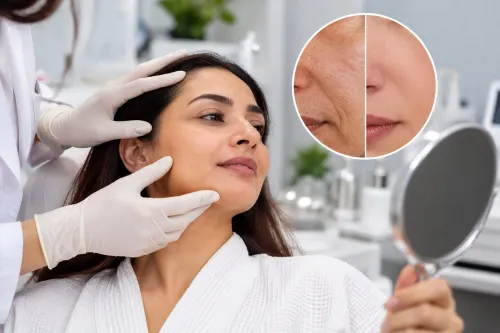
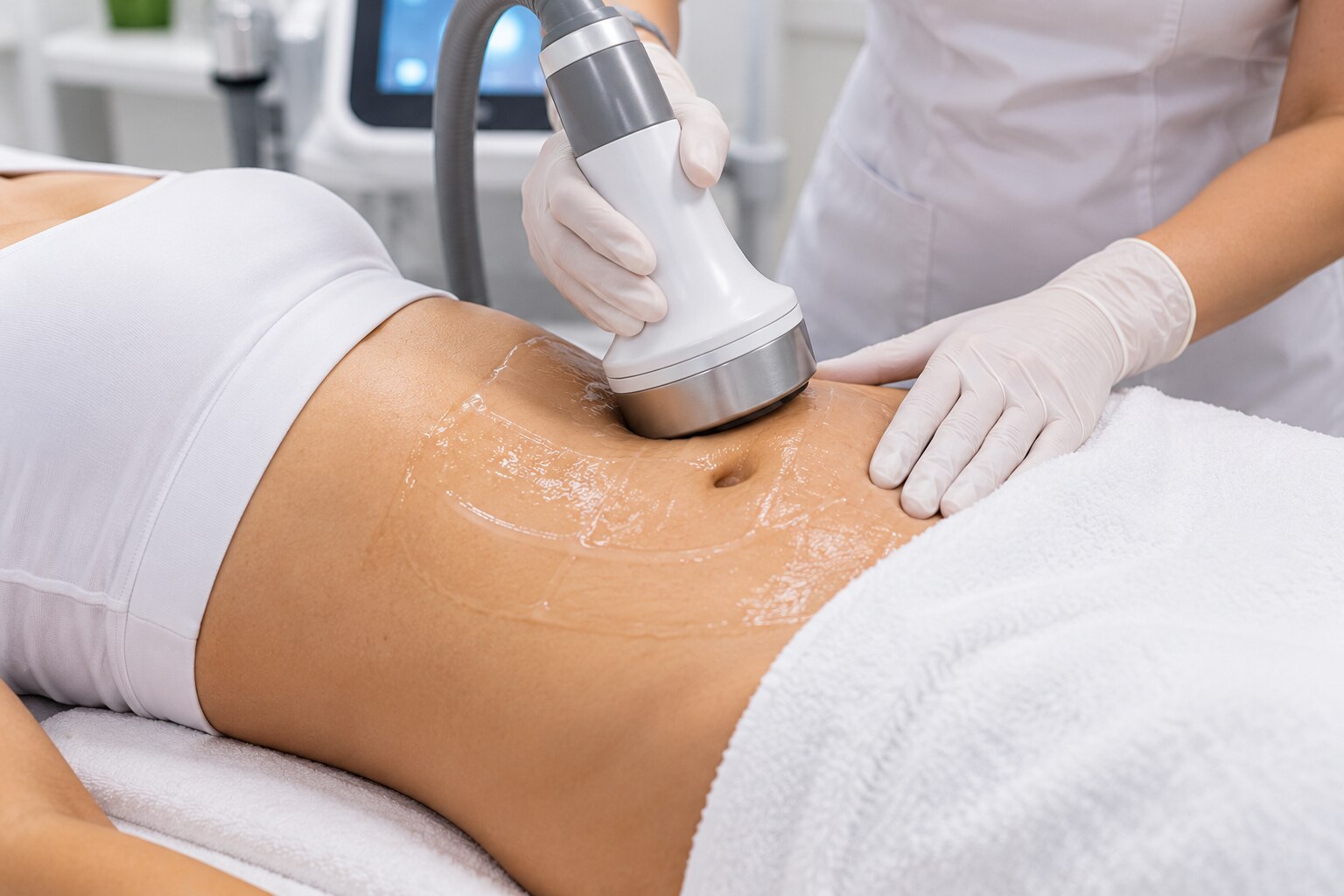
A protruding or loose abdomen can result from localized fat, lax skin, reduced muscle tone, stretch-mark texture, diastasis recti, or a hernia, and each problem calls for a different response. By the end, you will know what treatments the term covers, how they are performed, who should avoid them, and when surgical assessment makes more sense.
Key takeaways
- Treat “non-surgical tummy tuck” as a marketing term, not one standard procedure.
- Ask which device or injection is being used and what concern it targets.
- Choose contouring only for limited fat or laxity, not significant muscle separation.
- Request expected results, risks, downtime, number of sessions, and maintenance needs.
What does “non-surgical tummy tuck” actually mean?
The non-surgical tummy tuck meaning is a marketing label, not one standardized medical procedure. It usually describes abdominal contouring with devices or injections that target a specific concern without an incision.
Unlike abdominoplasty, it does not remove a hanging abdominal skin apron or repair separated muscles, and unlike weight-loss treatment, it does not reduce overall body weight.
Match the visible problem to the tissue being treated:
- Localized fat may respond to a fat-reduction method. The key liposuction versus non-surgical treatment distinction is that liposuction physically removes fat through a cannula, while non-surgical methods reduce or disrupt some fat without surgery.
- Loose skin may respond to heat-based skin tightening, but ordinary skin-tightening treatment does not remove substantial excess skin.
- Reduced abdominal muscle tone may respond to magnetic or electrical stimulation, which creates repeated contractions. It does not close diastasis recti or repair a hernia.
- Stretch-mark texture requires a texture-focused approach. A fat-reduction or skin-tightening device cannot erase stretch marks or correct deeper structural problems.
These treatments do not repair an umbilical or incisional hernia, close muscle separation, or promise general weight loss. A treated area can look smaller without a meaningful change on the scale. The result depends on the technology selected, the amount and type of tissue present, and your anatomy.
Which treatments may be sold under this name?
The label can cover several unrelated technologies, each aimed at a different abdominal concern. No single treatment combines fat removal, skin excision, muscle repair, and stretch-mark correction.
| Option | Main target | What it can do | What it cannot do |
|---|---|---|---|
| Radiofrequency skin tightening | Mild laxity | Heat tissue for modest tightening or circumference improvement; multiple sessions are common | Excise a hanging skin apron or repair separated muscles |
| Infrared light or focused ultrasound | Mild laxity or localized contour | Heat deeper tissue for modest tightening or size change | Remove substantial excess skin, repair a hernia, or close diastasis recti |
| Cryolipolysis fat freezing | Localized subcutaneous fat | Gradually reduce some fat cells; visible change develops over weeks to months | Tighten loose skin or produce immediate weight loss |
| Electromagnetic muscle stimulation | Abdominal muscle contractions | Create repeated contractions that may improve firmness temporarily | Directly remove fat or excess skin; lasting improvement may require maintenance |
| Injectable fat reduction | Localized fat | Deoxycholic acid is FDA-approved for adult submental fat | Routine abdominal use in the United States; abdominal injection is outside that indication |
Deoxycholic-acid injections deserve particular caution because incorrect placement can cause swelling, pain, bruising, numbness, or tissue injury. Ask what product is being proposed and which body area its regulatory labeling covers.
Stretch marks are a texture and pigment concern, not the same as fat or laxity. A texture-focused device cannot correct deeper skin excess, muscle separation, or a hernia. Combination protocols simply sequence separate targets—such as fat reduction followed by tightening—and do not prove that one all-purpose treatment exists.
What happens during treatment, and who is a reasonable candidate?
A treatment consultation begins with your medical history and a focused abdominal assessment, not with an immediate device application. The clinician identifies whether the visible concern is localized fat, mild skin laxity, or another cause of bulging.
1. The examination checks skin laxity, fat distribution, skin integrity, sensation, and signs of an umbilical or incisional hernia or diastasis recti. A photo or waist measurement records the starting point.
2. Tell the clinician about pregnancy or planned pregnancy, recent abdominal surgery, hernias, muscle separation, and implanted electronic or metal devices. The device’s technology determines which implants require special precautions.
3. The treatment zone is marked before applicator placement or handpiece placement. Correct positioning matters because poor contact or excessive energy can cause burns, blisters, bruising, swelling, pigment changes, or altered sensation.
4. Treatment sensations depend on the device: cryolipolysis can cause cooling, pulling, suction, tingling, and numbness; heat-based devices create warmth; muscle-stimulation systems produce vibration or repeated contractions. Session length is technology-dependent, so reject guaranteed time claims without the device name.
5. Afterward, protect irritated skin, monitor swelling or increasing pain, and follow the provider’s activity guidance. Contact the provider promptly for severe pain, blistering, spreading redness, or unexpected swelling.
A reasonable candidate has stable weight, localized fat or mild laxity, good general health, and realistic expectations. Cryolipolysis requires screening for cryoglobulinemia, cold agglutinin disease, and paroxysmal cold hemoglobinuria; pregnancy, compromised sensation or skin, and certain implants can make treatment unsuitable.
When is non-surgical contouring the wrong choice?
A device is the wrong choice when the problem needs structural correction, not modest surface contouring. Seek medical or surgical assessment for:
- Substantial excess abdominal skin or a hanging apron
- Pronounced muscle separation, including suspected diastasis recti
- A suspected umbilical or incisional hernia
- Large abdominal fat deposits or severe obesity
- A request for major, predictable abdominal reshaping
A fat-reduction device will not repair a hernia, remove excess abdominal skin, or provide diastasis recti treatment. Neither non-surgical contouring nor surgery replaces weight management.
| Option | Main advantage | Main limitation |
|---|---|---|
| Non-surgical contouring | No incision, surgical scar, or general anesthesia; less downtime | Smaller and less predictable change; it does not reproduce surgical results |
| Abdominoplasty | Removes excess skin and can repair abdominal muscle separation | Involves anesthesia, wounds, recovery, scarring, and operative risks |
| Liposuction | Removes localized fat deposits | Does not repair muscle separation or reliably tighten significant loose skin |
This non-surgical versus abdominoplasty decision depends on what you want corrected: fat, skin, or muscle. The liposuction comparison matters because removing fat can leave loose skin unchanged, while abdominoplasty addresses skin and muscle but carries a larger recovery burden.
If the abdomen is severely obese, markedly lax, painful, or structurally abnormal, pay for an examination before a contouring session. A device offers convenience; surgery offers a more dramatic correction at the cost of operative recovery and risk.
What risks, results, and questions should you review before choosing?
Non-surgical does not mean risk-free. Energy devices can cause burns, blisters, swelling, bruising, pigment changes, and temporary or persistent altered sensation. Risk depends on settings, applicator placement, skin type, and medical history. Cryolipolysis carries the rare risk of paradoxical adipose hyperplasia: months later, treated fat enlarges into a firm bulge and may require surgery.
Check pregnancy, planned pregnancy, hernia, abdominal surgery, altered sensation, and implanted devices against the device’s labeling.
| Option | Main limitation | Treatment results timeline |
|---|---|---|
| Heat-based devices | Modest tightening; no skin excision | Gradual change over weeks to months |
| Cryolipolysis | Does not tighten loose skin; rare paradoxical adipose hyperplasia | Fat reduction develops over weeks to months |
| Muscle stimulation | Does not remove fat or excess skin | Temporary firmness may require repeat and maintenance treatments |
Ask these questions before paying:
- Which tissue is being targeted: fat, skin, muscle, or stretch-mark texture?
- What is the device name, and what does its regulatory labeling permit?
- How many sessions are expected, and what is the likely magnitude of change?
- What is the treatment results timeline, including peak improvement?
- Which contraindications apply to your medical history?
- What aftercare is required, and what happens after an inadequate result or complication?
A consultation with Dr Megha Kadam-Best Skin Specialist 08048033401 can help match the visible abdominal problem to dermatology care or surgical referral instead of assuming every bulge is fat.
Frequently asked questions
What does “non-surgical tummy tuck” mean?
It is a marketing label for abdominal contouring with devices or injections, without an incision. It does not describe one standard medical procedure.
Which treatments may be called a non-surgical tummy tuck?
Clinics may use the term for fat-reduction devices, skin-tightening treatments, muscle-stimulation devices, or injections. Ask for the exact treatment name and the concern it targets.
Who is a reasonable candidate for non-surgical abdominal contouring?
A reasonable candidate has a stable weight and a limited, clearly defined concern such as localized fat or mild skin laxity. A consultation is needed to assess suitability.
When is non-surgical contouring the wrong choice?
It is the wrong choice when you expect major fat removal, substantial excess skin correction, or repair of separated abdominal muscles. Surgery may address those concerns more directly.
What should you ask before choosing treatment?
Ask about the device or injection, provider qualifications, expected improvement, number of sessions, downtime, risks, alternatives, maintenance, and total treatment plan.